Solar farming: a profitable combination of panels and crops
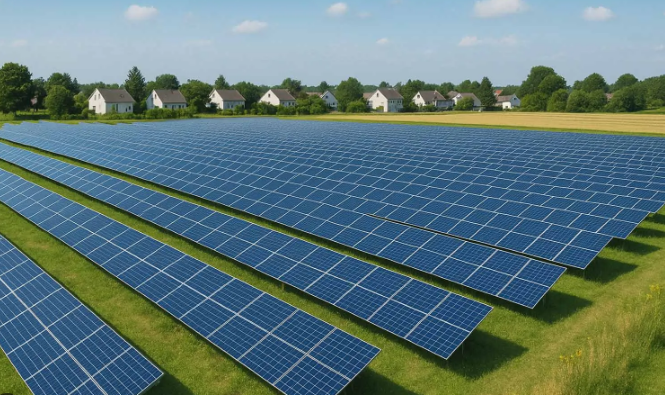
Photovoltaic farming or solar farming represents a promising niche in the solar industry. The idea is simple: Solar panels are mounted on special structures that allow crops to sprout directly beneath them. Therefore, the agricultural land surface is used intelligently and doubly.
When planning your solar farming layout there are several ways to do this: fixed panels 3-5 meters high and low vegetable/cereal crops, or structures that follow the sun and allow taller crops to be planted.
In addition to energy production, crops benefit from the shade of the panels and the retention of water in the soil. The coolness reduces water evaporation and the consequent need for irrigation.
Growth yields are better, with some studies showing increases of up to 25% in some crops. The multiple-use area and dual income make such projects extremely economically sustainable.
The main disadvantage is the higher initial investment for purchasing the necessary facilities. There are, however, some grants available for organic farming and renewable energy projects. Subsidies are useful for reducing initial costs.

Subsidies available for solar farming are:
- Non-refundable grants for investments in equipment, photovoltaic panels, solar structures, etc. In Romania they are granted through PNDR.
- Contributions for the conversion to organic agriculture and the maintenance of green production systems for at least 5 years.
- Vouchers for consultancy services in the field of ecological and renewable agriculture.
- Coupled support for agricultural crops and livestock raised organically or in extensive systems with limited natural resources.
- Free certification to obtain the eco-product mark, which opens up new markets and sales channels.
- Subsidies for photovoltaic microsystems for the supply of farms, barns or agritourisms.
Therefore, solar agriculture represents the future of sustainable production of food and energy at the same time. If you are interested in developing your industry in this niche, contact the Restart Energy team!
Conclusion
Photovoltaic farming, also known as agrivoltaics or solar farming, represents one of the most innovative approaches to combining renewable energy production with sustainable agriculture. Instead of forcing a choice between energy generation and food production, this system allows both activities to coexist on the same piece of land. By installing solar panels on elevated structures above crops, farmers can maximize land use while creating new economic opportunities and contributing to a cleaner energy future.
One of the greatest advantages of photovoltaic farming is its ability to improve overall land efficiency. Agricultural land is becoming an increasingly valuable resource as populations grow and demand for both food and clean energy continues to rise. Agrivoltaic systems address this challenge by enabling farmers to harvest solar energy without sacrificing agricultural productivity. In many cases, carefully designed panel layouts can even create beneficial growing conditions by providing partial shade that helps reduce water evaporation and protects certain crops from excessive heat.
Beyond increasing land productivity, photovoltaic farming also offers important financial benefits. Farmers can diversify their income by producing renewable electricity while continuing their agricultural operations. This additional revenue stream can improve the economic resilience of farms, reduce dependence on fluctuating crop prices, and create greater financial stability over the long term. In regions where renewable energy incentives or net metering programs are available, the economic advantages can become even more significant.
Environmental sustainability is another major strength of agrivoltaic systems. Solar energy generation reduces greenhouse gas emissions and decreases reliance on fossil fuels, while responsible agricultural practices help preserve soil quality and biodiversity. The combination of renewable energy and efficient farming supports climate adaptation strategies and encourages more sustainable management of natural resources, including water and land.
Technological innovation continues to improve the performance of photovoltaic farming systems. Modern solar panels, advanced mounting structures, and smart monitoring technologies allow farmers to optimize both electricity generation and crop production. As research progresses, more crop varieties and farming methods are being successfully integrated with solar installations, expanding the potential applications of agrivoltaic systems around the world.
Ultimately, photovoltaic farming demonstrates that renewable energy and agriculture can work together rather than compete for valuable land resources. By producing clean electricity while supporting food production, this innovative approach offers environmental, economic, and social benefits that align with the goals of sustainable development. As global demand for renewable energy and agricultural productivity continues to increase, photovoltaic farming is expected to become an increasingly important solution for building a more resilient, efficient, and environmentally responsible future.
Deja una respuesta